Best Riftbound Vendetta Decks

Riftbound: Vendetta released worldwide on 31 July 2026 and is out now. Every one of the set's 166 cards is officially confirmed, so this is the moment to actually start acquiring the pieces for the decks you want to build. Below are three strong archetype blueprints, each grounded in Vendetta's confirmed mechanics and domain pairings, with the synergies that make them tick, real card visuals for each, and how to pilot them.
An honest note up front: these are blueprints, not netdecks. Vendetta is out and the first events have been played, but the metagame is days old — early results still look a lot like Unleashed, with established legends adapting rather than new Vendetta legends taking over. Nasus was the first Vendetta legend to actually win a tournament, and Diana took Sideways Showdown: CN vs World on 25 July. We give you the shell — the roles each deck needs, built from confirmed cards — and once you've picked one, the deck builder prices it card for card in your own market.
First, the deckbuilding rules (the quick version)
Every legal Riftbound deck is built around one thing: your Legend. The Legend sets your identity and the domains you can build in, and every card you run has to be castable by your runes — your rune base has to produce the domains your cards demand. Two rules of thumb keep a deck legal and consistent:
- Stay in your Legend's domains. A Fury/Calm Legend runs Fury and Calm cards; you can't splash a card whose domain your runes can't pay for.
- Keep your rune base focused. The more domains you stretch across, the less reliably you cast on curve. Vendetta's two-domain pairings are the sweet spot.
New to this? Read how a Riftbound deck is built first — it covers Legends, runes and domains in full.
What makes a deck "synergistic" (and what doesn't)

"Synergy" gets thrown around for any two cards that look nice together. A real synergy is an engine — a repeatable loop where each piece feeds the next, so the deck gets stronger the longer the game runs. That's exactly where Vendetta's new mechanics point:
- Setup — cheap enablers that fill your trash or lay down gear.
- Engine — the loop itself: Burn feeds Flow, and gear re-readies for value.
- Payoff — cash the loop in: Empower a threat, or replay a big card from the trash.
- Recur — Flow buys your enablers back, and you do it again.
If your combo only works once, it's a nice card — not a synergy. Every deck below is built around one of these loops.
Each archetype below now includes a full 40-card example build (plus battlefields, runes and a 10-card side deck — a real 66-card total once you add the Legend, using the larger side deck that came in with the July 2026 tournament rules update on 24 July 2026). These are RiftCompare's own homebrew constructions, not official spoiled decklists or tournament results — we built them by pairing each Vendetta Legend with proven cards from Riftbound's existing pool (the game doesn't rotate, so Origins/Spirit Forged/Unleashed staples are just as legal as brand-new Vendetta cards). Treat them as a genuine starting point to buy toward today, not a solved list — swap in Vendetta-specific support as more of it gets confirmed.
Archetype 1 — Flow Value (Fury + Calm)
Identity: grind the game long, recur your best cards, and win on raw card advantage.
The engine: the purest expression of Burn + Flow. Self-Burn stocks your trash quickly; Flow lets you replay from it, so every card effectively gets used twice. Against aggro you trade and rebuy; against control you never run out of gas.
The shell (built from confirmed cards):
- Legend: a Fury/Calm Legend with a recursion or trash payoff.
- 4–6 enablers: cheap cards that Burn your own deck or cycle to fill the trash.
- 3–4 Flow payoffs: your best units and spells that you want to replay from the trash.
- 6–8 interaction: removal and combat tricks to survive to the long game.
- Runes: an even Fury/Calm base — you need both colours online reliably.
Example 40-card build — "Nasus, Curator of the SandsUS$0.13" (RiftCompare homebrew, not an official or tournament list):
Nasus anchors the shell on Calm's inevitability, splashing a single copy of his rival Renekton as a Fury finisher — exactly the "forced rivalry" tension Vendetta's domain pairings are built around.
- Legend: Nasus, Curator of the Sands
- Units (16): 3× Scuttle CrabUS$3.62 · 3× Tideturner · 3× Trevor SnoozebottomUS$0.04 · 2× Evelynn, EntrancingUS$1.00 · 2× Irelia, FerventUS$18.99 · 2× Disarming RakeUS$0.09 · 1× Renekton, Butcher of the SandsUS$0.21 (rival splash)
- Gear (5): 3× Boots of SwiftnessUS$0.39 · 2× Zhonya's HourglassUS$13.24
- Spells (19): 3× Charm · 3× Defy · 3× Discipline · 3× Back OffUS$0.15 · 3× En GardeUS$0.14 · 2× Not So FastUS$1.29 · 2× Punch FirstUS$0.18
- Battlefields (3): Abandoned HallUS$0.06 · Targon's PeakUS$0.25 · Star SpringUS$0.10
- Runes (12): 9× Calm RuneUS$0.08 · 3× Fury RuneUS$0.02
- Side deck (10): 1× Not So Fast · 1× Disarming Rake · 2× Star-Crossed · 2× Stare DownUS$0.05 · 2× Whiteflame ProtectorUS$3.16 · 2× Unyielding SpiritUS$0.40
(Not So Fast and Disarming Rake are capped at one copy here because the main deck already runs two of each — the 3-copy limit counts main deck and side deck together.)
How to play it: you're the grinder. Trade early, don't over-commit into removal, and treat your trash as a second hand — sequence so the cards you Burn are the ones Flow most wants back.
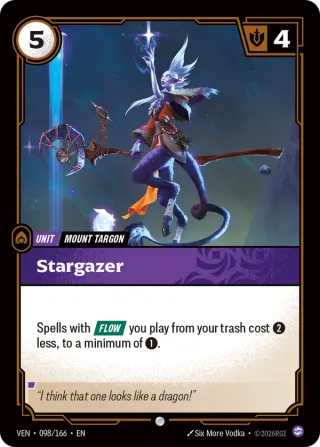
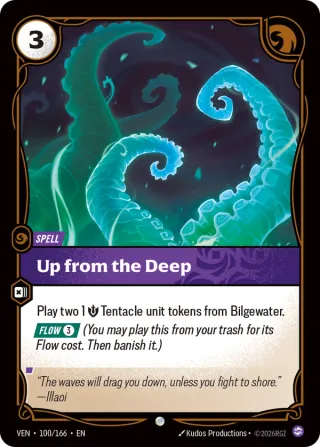
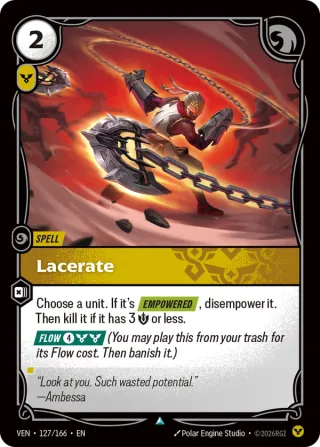
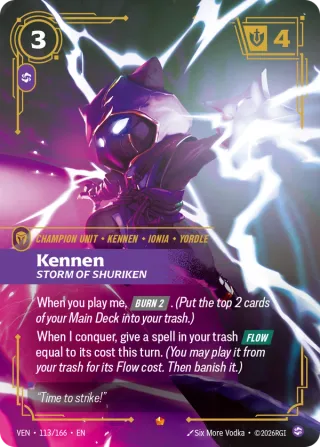
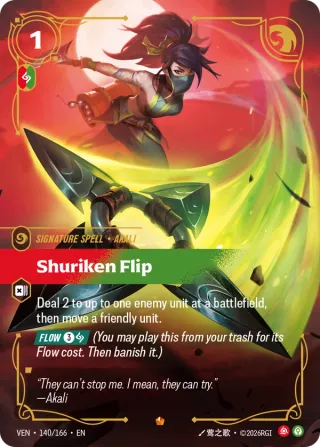
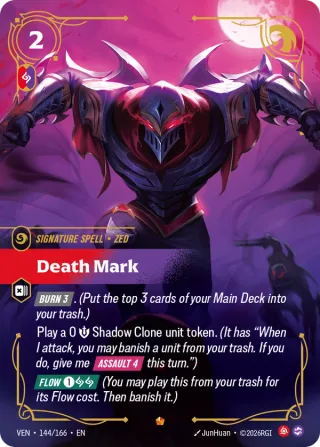
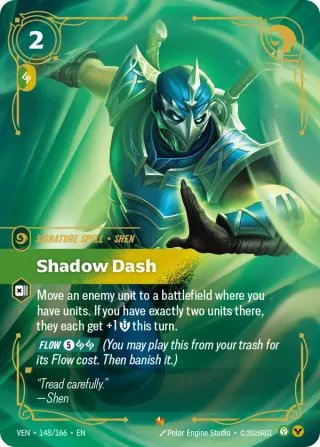
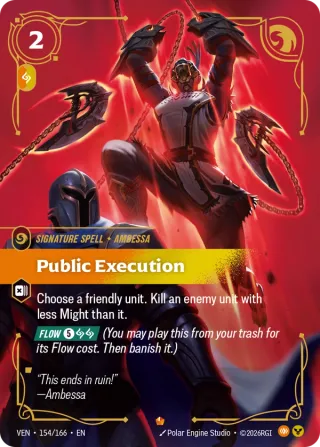
Every Flow card in Vendetta
Every officially revealed Vendetta card with the Flow keyword — the Flow Value shell above is built from these. Tap a card for its page and live prices.
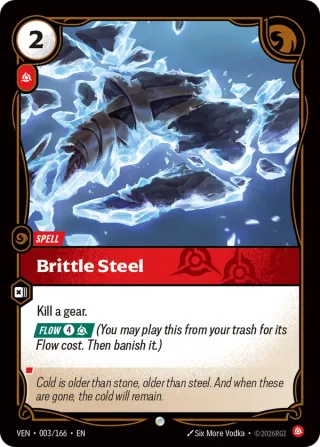
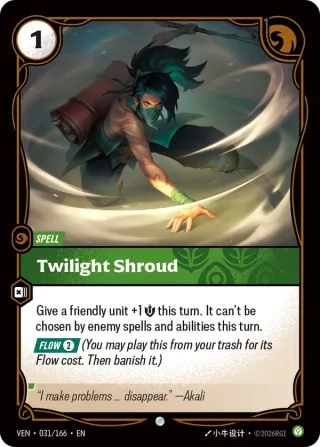
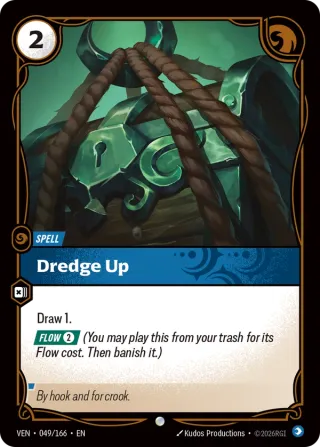
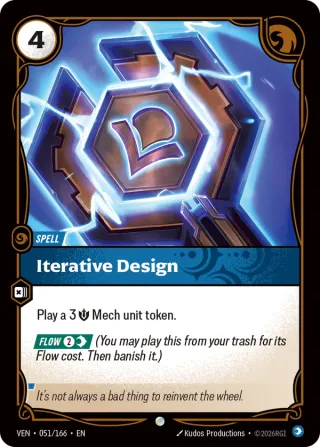
Archetype 2 — Burn / Disruption (Chaos + Order)
Identity: the aggressive, disruptive take on Burn — attack the opponent's deck as a clock while self-Burn powers your own payoffs.
The engine: Chaos/Order leans into the opponent-facing side of Burn. You chip their deck directly (Riftbound's take on mill) while using self-Burn to fuel Empower and Flow payoffs. Two-pronged: they're racing your clock and your board.
The shell:
- Legend: a Chaos/Order Legend that rewards Burn or aggression.
- 4–6 Burn pieces: a mix of opponent-deck Burn and self-Burn fuel.
- 3–4 payoffs: threats paid off by a full trash or by Empower.
- 6–8 tempo/removal: to protect your clock.
- Runes: Chaos/Order base, tuned toward whichever colour holds your Burn.
Example 40-card build — "Zed, Master of ShadowsUS$0.15" (RiftCompare homebrew, not an official or tournament list):
Zed carries the aggression on Chaos, splashing a single copy of his rival Shen — again leaning into the built-in rivalry — for a disciplined Order finisher.
- Legend: Zed, Master of Shadows
- Units (16): 3× Ravenbloom StudentUS$0.25 · 3× Hwei, Brooding PainterUS$2.92 · 2× Vex, ApatheticUS$13.35 · 2× Traveling MerchantUS$0.17 · 3× Watchful SentryUS$0.10 · 2× Black Rose DignitaryUS$0.03 · 1× Shen, Eye of TwilightUS$0.11 (rival splash)
- Gear (5): 3× Baited HookUS$42.10 · 2× Guardian AngelUS$0.80
- Spells (19): 3× Gust · 3× Stacked DeckUS$0.41 · 2× Hard BargainUS$0.72 · 2× Moonfall · 3× Sacrifice · 3× Mirror ImageUS$11.99 · 2× Hidden BladeUS$0.65 · 1× Turn to DustUS$0.08
- Battlefields (3): Zaun WarrensUS$0.10 · Ravenbloom ConservatoryUS$0.10 · Aspirant's ClimbUS$0.10
- Runes (12): 7× Chaos RuneUS$0.07 · 5× Order RuneUS$0.08
- Side deck (10): 2× Turn to Dust · 1× Moonfall · 2× Star-Crossed · 2× Deathgrip · 2× Safety InspectorUS$0.12 · 1× Singularity
How to play it: apply pressure on two axes. Don't tunnel on decking them out — the deck-Burn is a clock that forces bad decisions, while your board usually closes the game. Highest skill ceiling of the three, and the easiest to mis-sequence.
Archetype 3 — Empower Midrange (Mind + Body)
Identity: deploy efficient bodies early, then pay to Empower them into late-game threats. The most "fair" and beginner-friendly of the three — and the one with the most revealed support already.
The engine: Empower rewards curving out and then reinvesting. Two revealed Legends already point the way:
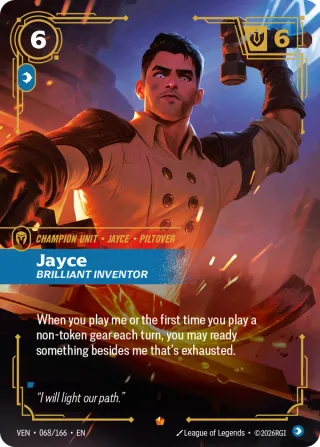
- Jayce, Brilliant InventorUS$0.43 — a rare dual-domain Mind/Body Legend built around gear that stays on the board. When he readies he picks up a combat mode, so decks that tap and re-ready gear squeeze extra value every turn.
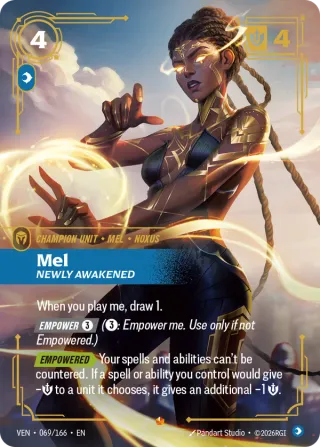
- Mel — a Mind Legend whose Empower (pay energy) makes your Might-reduction effects trigger twice. Build a package of "shrink their unit" spells and each one does double duty.
The shell:
- Legend: Jayce (gear/value) or Mel (Might-reduction).
- 6–8 efficient units: cheap bodies that are fine early and great once Empowered.
- 3–4 Empower payoffs / gear: the cards you reinvest energy into.
- 4–6 Might-reduction or removal: doubly good under Mel.
- Runes: Mind-heavy with a Body splash (or the reverse for a Jayce build).
Example 40-card build — "Jayce, Brilliant Inventor" (RiftCompare homebrew, not an official or tournament list):
Jayce is the rare Legend who's dual-domain out of the gate, so this shell runs an even Mind/Body base rather than a splash. Prefer Mel's Might-reduction angle instead? Swap the Body slots below for more single-target removal and lean Mind-heavy — same shell, different payoff.
- Legend: Jayce, Brilliant Inventor
- Champion: Jayce, Hammer in HandUS$0.13
- Units (16): 3× Clockwork KeeperUS$0.05 · 3× Lonely PoroUS$0.10 · 2× First MateUS$0.22 · 3× Karthus, EternalUS$2.74 · 3× Glasc MixologistUS$0.23 · 2× Vi, PeacekeeperUS$3.42
- Gear (6): 3× Trinity ForceUS$0.29 · 2× Shepherd's HeirloomUS$0.01 · 1× B.F. SwordUS$0.25
- Spells (17): 3× Punch First · 3× Challenge · 3× Riposte · 3× Sacrifice · 3× Mirror Image · 2× Hidden Blade
- Battlefields (3): Grove of the God-WillowUS$0.10 · Seat of PowerUS$0.08 · Windswept HillockUS$0.20
- Runes (12): 6× Body RuneUS$0.07 · 6× Mind RuneUS$0.08
- Side deck (10): 2× Deathgrip · 2× Safety Inspector · 2× Salvage · 2× Unyielding Spirit · 2× Fiora, PeerlessUS$0.24
How to play it: curve out, but don't rush your energy. The trap is spending everything early — hold energy to Empower at the right moment so a cheap unit becomes the biggest threat on the board.
Jayce & Mel — the Empower Legends
Vendetta's two Empower-anchored Legends, straight from our live database.
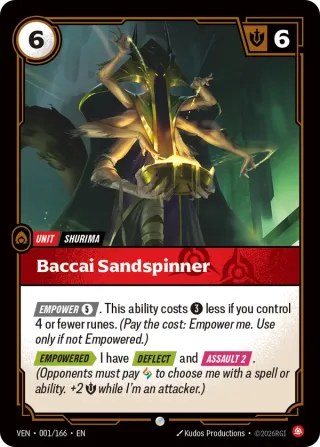
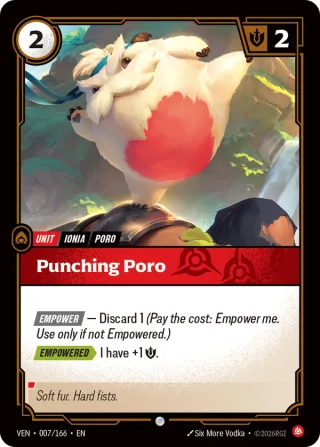
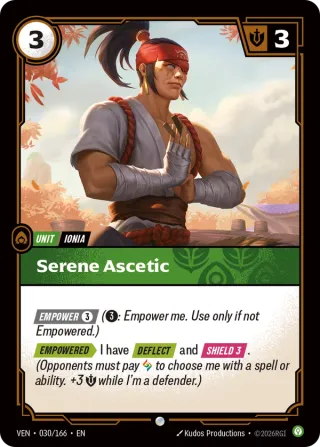
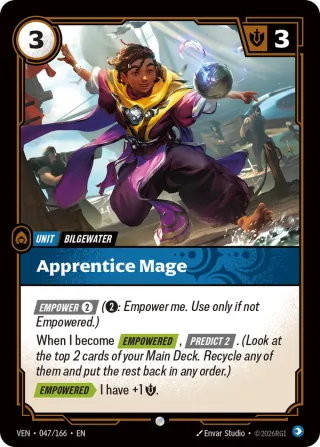
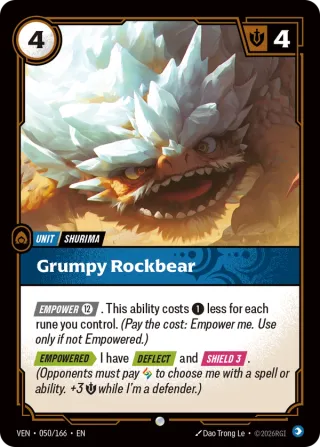
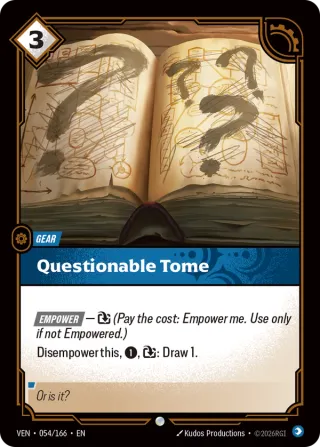
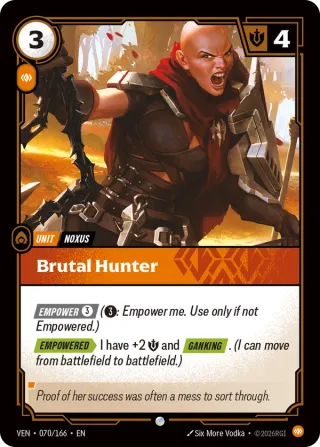
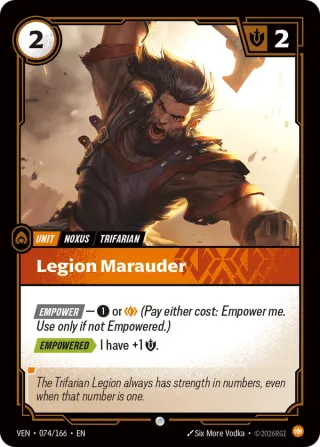
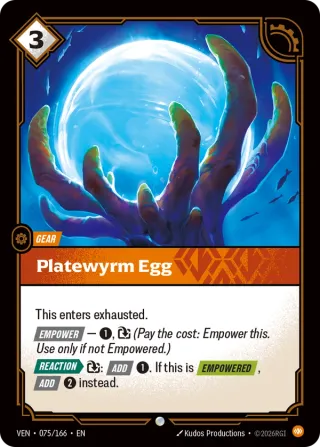
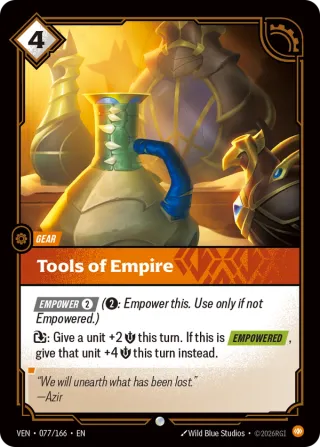
Empower cards in Vendetta
Every Vendetta card with the Empower keyword — build the Empower Midrange shell around these.
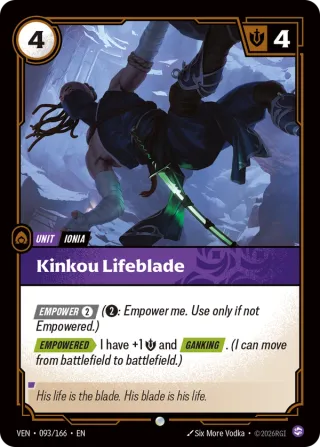
Piloting any of these decks
- Mulligan for your engine, not your payoff. A hand with enablers and a way to start the loop beats a hand of finishers you can't fuel yet.
- Protect the engine. Once your loop is running the game is yours — bait or answer removal before committing the key piece.
- Sequence around energy. Empower and Flow both want energy banked; plan the turn you go over the top.
What to watch as the full release (31 July) approaches
- Flow Value: which cheap self-Burn enabler and Flow payoff pairing real pilots settle on — that's what defines the deck in practice.
- Burn: how fast the opponent-Burn clock actually plays out at the table, and whether it's a real win condition or just disruption.
- Empower: how players sequence Jayce/Mel support, and how expensive the strongest Empower effects turn out to be to use well.
We'll update this guide with concrete lists as a real meta forms — and keep an eye on the price movers, since the cards that enable the first strong decks climb fastest at launch.
Buy into a shell now, before the launch-week rush
Early singles are already trading, which means you don't have to wait until 31 July to start — the Vendetta set page has live prices on every confirmed card as they list. Once you've settled on a shell, drop it into the deck pricer to total every card at the cheapest live price across stores, in your currency — the fastest way to build a new-set deck without overpaying in the launch rush. For a brand-new set, singles are usually cheaper than sealed for a specific deck.
For the full picture, read the Empower, Flow and Burn guides, and track live prices on the Vendetta set page as cards release.
Prices for cards in this post
- Nasus, Curator of the SandsVendetta · 145/166US$0.13
- Scuttle CrabUnleashed · 053/219US$3.62
- Trevor SnoozebottomUnleashed · 048/219US$0.04
- Evelynn, EntrancingUnleashed · 141/219US$1.00
- Irelia, FerventSpirit Forged · 057/221US$18.99
- Disarming RakeSpirit Forged · 032/221US$0.09
- Renekton, Butcher of the SandsVendetta · 141/166US$0.21
- Boots of SwiftnessSpirit Forged · 133/221US$0.39
- Zhonya's HourglassOrigins · 077/298US$13.24
- Back OffUnleashed · 042/219US$0.15
- En GardeOrigins · 046/298US$0.14
- Not So FastSpirit Forged · 045/221US$1.29
- Punch FirstSpirit Forged · 097/221US$0.18
- Abandoned HallUnleashed · 205/219US$0.06
- Targon's PeakOrigins · 289/298US$0.25
- Star SpringUnleashed · 215/219US$0.10
- Calm RuneOrigins · 042/298US$0.08
- Fury RuneOrigins · 007/298US$0.02
- Stare DownUnleashed · 107/219US$0.05
- Whiteflame ProtectorOrigins · 082/298US$3.16
- Unyielding SpiritOrigins · 145/298US$0.40
- Zed, Master of ShadowsVendetta · 143/166US$0.15
- Ravenbloom StudentOrigins · 103/298US$0.25
- Hwei, Brooding PainterUnleashed · 080/219US$2.92
- Vex, ApatheticUnleashed · 150/219US$13.35
- Traveling MerchantOrigins · 185/298US$0.17
- Watchful SentryOrigins · 096/298US$0.10
- Black Rose DignitaryUnleashed · 152/219US$0.03
- Shen, Eye of TwilightVendetta · 147/166US$0.11
- Baited HookOrigins · 242/298US$42.10
- Guardian AngelSpirit Forged · 051/221US$0.80
- Stacked DeckOrigins · 183/298US$0.41
- Hard BargainSpirit Forged · 136/221US$0.72
- Mirror ImageUnleashed · 200/219US$11.99
- Hidden BladeOrigins · 213/298US$0.65
- Turn to DustUnleashed · 070/219US$0.08
- Zaun WarrensOrigins · 298/298US$0.10
- Ravenbloom ConservatorySpirit Forged · 215/221US$0.10
- Aspirant's ClimbOrigins · 276/298US$0.10
- Chaos RuneOrigins · 166/298US$0.07
- Order RuneOrigins · 214/298US$0.08
- Safety InspectorUnleashed · 164/219US$0.12
- Jayce, Brilliant InventorVendetta · 068/166US$0.43
- Jayce, Hammer in HandVendetta · 088/166US$0.13
- Clockwork KeeperOrigins · 044/298US$0.05
- Lonely PoroSpirit Forged · 036/221US$0.10
- First MateOrigins · 132/298US$0.22
- Karthus, EternalOrigins · 236/298US$2.74
- Glasc MixologistSpirit Forged · 165/221US$0.23
- Vi, PeacekeeperUnleashed · 176/219US$3.42
- Trinity ForceSpirit Forged · 115/221US$0.29
- Shepherd's HeirloomUnleashed · 158/219US$0.01
- B.F. SwordSpirit Forged · 161/221US$0.25
- Grove of the God-WillowOrigins · 280/298US$0.10
- Seat of PowerSpirit Forged · 217/221US$0.08
- Windswept HillockOrigins · 297/298US$0.20
- Body RuneOrigins · 126/298US$0.07
- Mind RuneOrigins · 089/298US$0.08
- Fiora, PeerlessSpirit Forged · 110/221US$0.24
Cheapest in-stock price we track in your market, updated daily. Tap a card for every store.
Shop this guide
eBay- Jayce singles — the Empower championSearch eBay →
- Mel singlesSearch eBay →
- Vendetta singles on eBaySearch eBay →
- Vendetta booster boxesSearch eBay →
Affiliate link: as an eBay Partner Network affiliate, RiftCompare earns from qualifying purchases — at no extra cost to you.
Live listings on your local eBay. Always check seller ratings before buying.
Frequently asked questions
What are the best Riftbound Vendetta decks?
This guide sets out three archetype blueprints, each grounded in Vendetta's confirmed mechanics and domain pairings: Flow Value (Fury + Calm), Burn / Disruption (Chaos + Order) and Empower Midrange (Mind + Body). Each one comes with a full example build, a side deck and notes on how to pilot it.
Are these official Riftbound Vendetta decklists or tournament results?
No. The lists here are RiftCompare's own homebrew constructions rather than official spoiled decklists or tournament results, put together by pairing each Vendetta Legend with proven cards from Riftbound's existing pool. Treat them as a genuine starting point rather than a solved list.
How many cards do you need for a Riftbound Vendetta deck?
Each example build here is a 40-card main deck plus battlefields, runes and a 10-card side deck. That comes to 66 cards in total once you add your Legend.
Which Riftbound Vendetta deck is best for beginners?
Empower Midrange (Mind + Body) is the most fair and beginner-friendly of the three, and it has the most revealed support behind it. You deploy efficient bodies early, then pay to Empower them into late-game threats.
Can I use cards from older sets in a Riftbound Vendetta deck?
Yes. The game doesn't rotate, so Origins, Spirit Forged and Unleashed staples are just as legal as brand-new Vendetta cards, and the example builds here lean on exactly that.
How much does it cost to build a Riftbound Vendetta deck?
That depends on which shell you pick and what stores are asking on the day, so it's worth pricing the actual list rather than working from a fixed figure. Drop your build into the deck pricer to total every card at the cheapest live price across stores in your currency, and check the current prices on the Vendetta set page.
Ready to buy?
Every confirmed card, priced live as early singles and stores list them.