Learn Riftbound
The interactive guide to the League of Legends TCG. Step through how a game flows, explore the domains with real cards, see exactly what goes in a deck — then test yourself. Completely free: no signup, no paywall, no catch.
The shape of a game
Five steps from sitting down to winning — tap through.
Start with your Legend
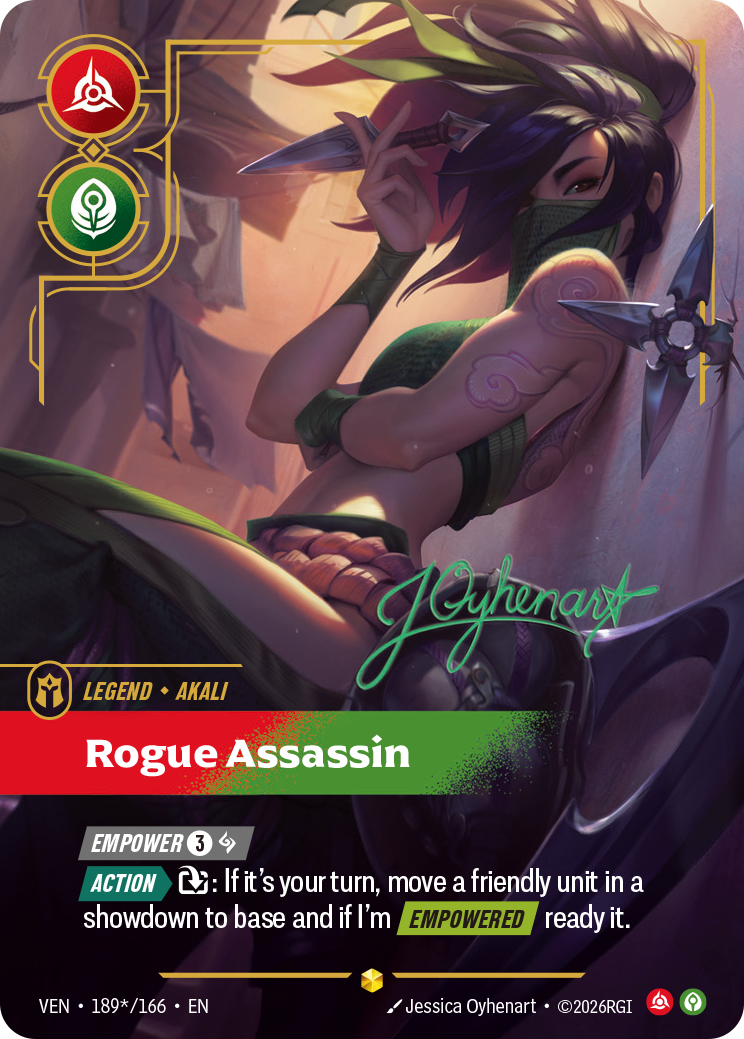
Your Legend defines your deck: its domains, its Champion, its game plan. You and your opponent each bring a full deck built around one.
Explore the domains
Every card belongs to a domain — the game's colour system. Tap one to meet it.
Fury
198 cardsAggression and fire. Fury decks hit fast and hit hard, looking to end the game before slower plans come online.
What goes in a deck
Every part of a tournament list, to scale — tap each segment.
Main deck
~39 cardsYour Units, Spells and Gear — where most of your strategy lives. This is the pile you draw from all game. Together with your Champion it makes up the 40-card main deck.
Want the full breakdown with costs? Read How a Riftbound deck is built → or price any list in the deck builder →
Every card type, in plain words
The high-level idea of each — the official tutorial covers the exact rules.



Quick quiz: guess the domain
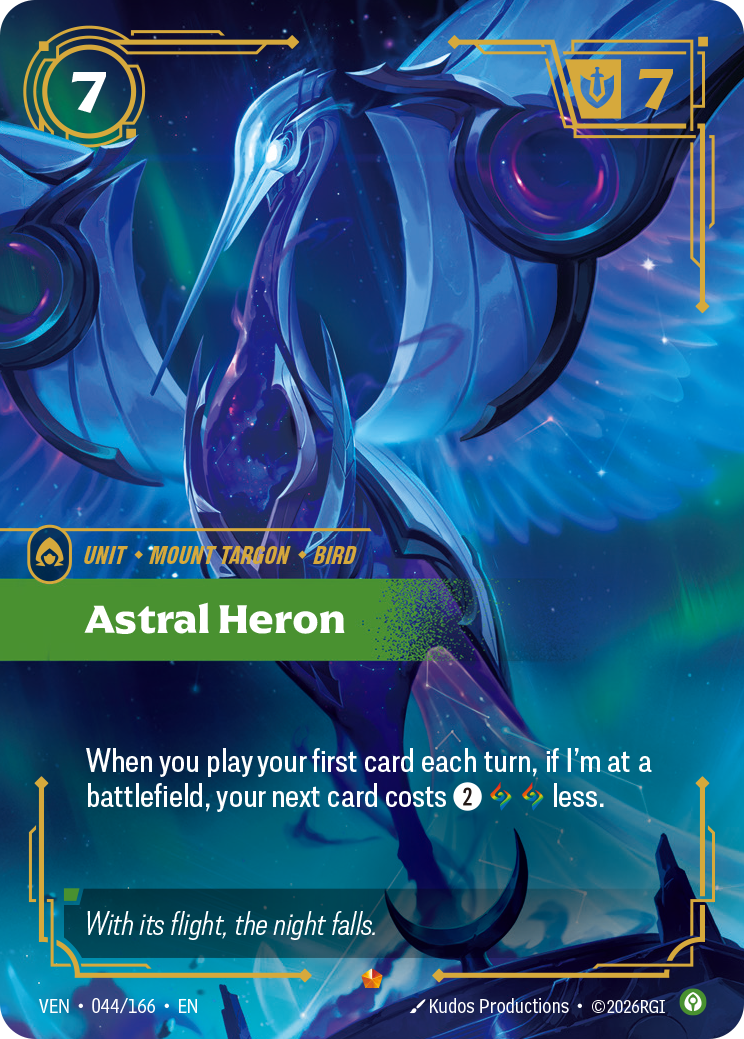
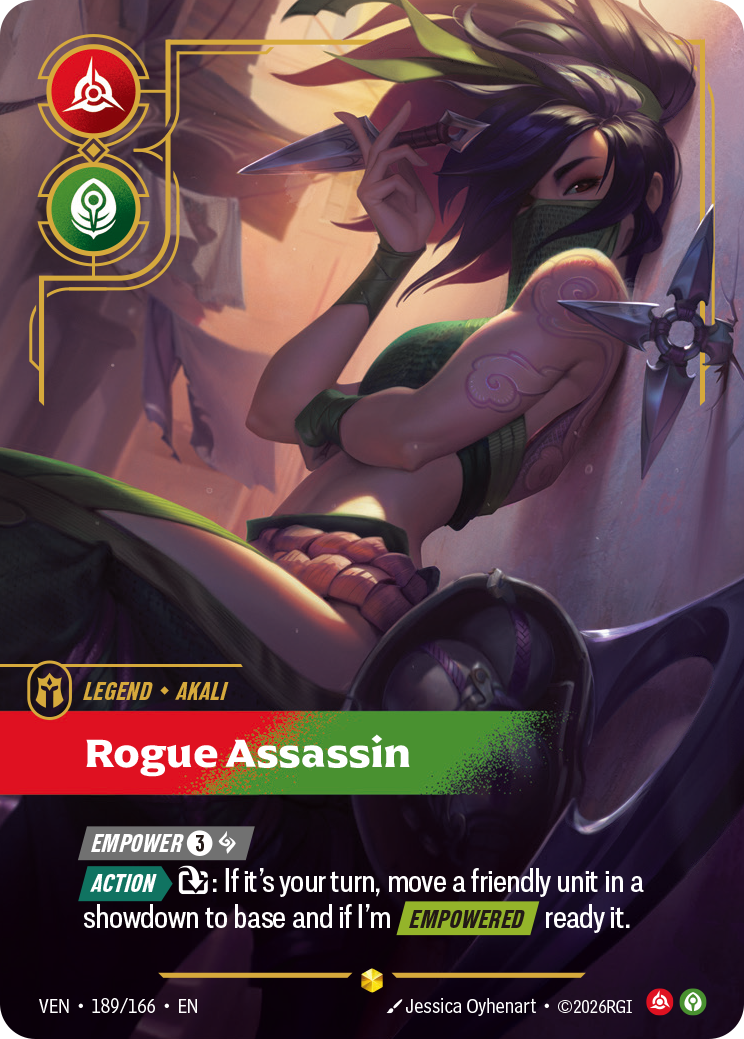
Five real Legends from the database — can you place them?

Which domain does Draven, Glorious Executioner belong to?
Your first week, step by step
- 1
Learn the rules
Riot's official quick-start teaches the game in about 15 minutes — the best first stop.
Official guide ↗ - 2
Know what to buy (and what to skip)
Our beginner guide covers exactly what's worth your first dollars — and the traps.
Beginner buying guide → - 3
Understand deck building
What goes in a Riftbound deck and why — Legends, domains, the whole structure.
Deck anatomy → - 4
Build cheap, play real games
Competitive-enough budget decks so you can play before you invest.
Budget decks →
Speak the language
Game terms
- Legend
- The card your whole deck is built around — it defines your domains and your Champion.
- Champion
- Your Legend's signature unit; the star of the deck.
- Domain
- The game's colour system: Fury, Calm, Mind, Body, Chaos and Order (plus Colorless). Decks commit to one or two.
- Rune
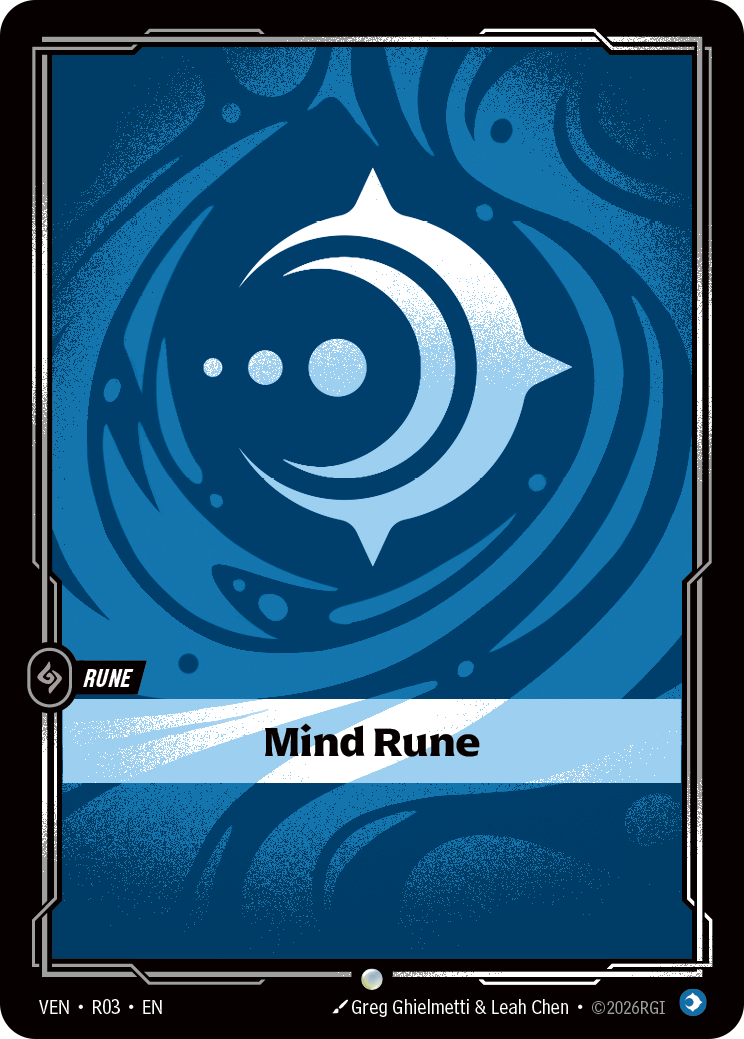
- A resource card. Rune colours must match your domains so you can cast your cards on time.
- Battlefield
- A contested location card — games are decided by the fights here.
- Energy
- What cards cost to play. Cheap cards come down early; expensive ones need runes online.
- Might
- A unit's muscle in combat — the number that decides fights.
- Mulligan
- Your one chance to shuffle back a bad opening hand and redraw. Keep hands with runes AND early plays.
- Side deck
- Up to 10 extra cards swapped in between tournament games to tune your deck per matchup (raised from 8 on 24 July 2026). No Runes, Legends or Battlefields, and it shares the 3-copy limit with your main deck.
Collector terms
The words that decide what a card costs — worth knowing before you buy your first single.
- Base print
- The standard version of a card — plays identically to the fancy versions and costs the least.
- Alt-art / Showcase
- Alternate-art treatments of a card (numbers like 112a). Same gameplay, collector pricing.
- Signature
- Artist-signed, overnumbered printings (a ★ in the number) — among the rarest pulls in the game.
- Overnumbered
- Cards numbered past the set's base count (e.g. 238/219) — special chase pulls.
- Promo
- Limited printings from prereleases and organised play. Same card, its own price.
- Near Mint (NM)
- The benchmark card condition prices assume. Played copies should always cost less.
See the difference in practice: what makes a card valuable →
New-player questions
Is Riftbound hard to learn?
No — the official tutorial teaches the rules in about 15 minutes, and this page gives you the shape of the game first: Legends, domains, runes, battlefields. Most new players are playing real games on day one.
What goes in a Riftbound deck?
A tournament list is built from a Legend and its Champion, a main deck of about 40 Units, Spells and Gear, 12 Runes matching your domains, 3 Battlefields, and a side deck of up to 10 cards for swapping between games — 66 cards in total.
What are the Riftbound domains?
Six domains — Fury, Calm, Mind, Body, Chaos and Order — plus Colorless cards that fit any deck. Each domain has its own playstyle, and most competitive decks commit to one or two.
What's the cheapest way to start playing Riftbound?
Start with a ready-to-play product like a Proving Grounds kit, then upgrade it card-by-card with singles — far cheaper than opening boosters hoping to pull what you need. RiftCompare shows the cheapest store for every card.
How can I practice without buying cards?
Learn the card pool with the daily Riftle game, and browse real tournament decklists to see how they're built — all free on RiftCompare.
Riftle — the card game about the card game
The fun way to learn the card pool: guess the mystery card with hints on set, domain, type, rarity, cost and might. A new daily card — or play Unlimited. Free forever.
Riftbound is a trademark of Riot Games. RiftCompare is an independent community site — this page will always be free.